
Your body a source of wisdom beyond your wildest imagination. Your DNA carries the stories of all your ancestors; as well as the potential of your descendants. In your cellular memory lies the answers to all your questions. The body expresses what the psyche cannot articulate - through somatic sensations, symptoms, or affective states.

In The Handless Maiden, a Brothers Grimm tale, a poor miller is approached by the devil-in-disguise who offers wealth in exchange for “what stands behind your mill.” Believing it to be an apple tree, the man agrees, only to discover that his daughter was standing there.

There is a deep and often unspoken grief in the loss of the little boy or girl inside each of us - the one who once looked at life with wide-eyed innocence, full of hopes, dreams, and pure-hearted belief in possibility. There comes a moment in the journey of individuation when we realize that the child we once were has been exiled - out of necessity.

The process of individuation is a lifelong journey of integrating the conscious and unconscious aspects of the self, leading to the fullest, most authentic expression of being. Individuation necessitates engagement with the Shadow and the Self, both of which hold immense creative potential. Unlocking the creative psyche requires more than passive introspection - it calls for active immersion in the inner world.

The concept of holding the tension of opposites is central to the Jungian journey of individuation. Our psyches are pulled between opposing forces, such as the conscious and the unconscious, light and shadow, masculine and feminine, or rationality and intuition. These opposites are archetypal in nature and cannot be fully integrated or reduced into one; they represent fundamental dualities.

Jung believed that the psyche operates as a self-regulating system, akin to the body, aiming to maintain internal stability amidst external influences. This equilibrium involves a balance between polarities wherein the psyche integrates unconscious elements like archetypes and complexes into conscious awareness. Through self-discovery and transformation, a process Jung termed ‘individuation’, individuals seek to manifest their unique potential and achieve inner harmony, fostering a sense of wholeness.

Carl Jung's concept of the archetype of the Self is a complex idea of embodied consciousness, symbolizing unity between body, mind, and soul. It directs us to explore and integrate the various parts of our psyche while maintaining a homeostatic balance, and serves as a guiding force on the journey of individuation.

‘Conscious relating’ emphasizes self-awareness, authenticity, genuine understanding, mutual respect, and growth within relationships. Viewed through a Jungian framework, this requires a willingness and commitment to engage in introspection and self-exploration. This doesn't mean relinquishing personal boundaries or merging identities, but rather recognizing that by understanding our own motivations, fears, and desires, we can communicate more honestly and openly with our partners. This level of vulnerability fosters a safe environment where authentic connecting can flourish. Relationships then become a container for the journey of individuation while meeting our need for emotional attachment.

Individuation is what Carl Jung called the process of lifelong psychological development with a person moving closer to a sense of wholeness, uniqueness, authenticity, self-knowledge, and fuller realization of inner potentials. The purpose of individuation is to achieve a state of unified consciousness as an individual, integrating all parts of the self, conscious and unconscious.

Myths and stories throughout the ages and across the world tell tales of heroes and heroines who survive the ordeals of impossible tasks given to them or perhaps having to fight dragons, but hopefully coming home with the treasure. The hero’s journey is a dynamic process that can serve as a conceptual metaphor for understanding individual development where each major transitionary life event serves as a call to step into an initiatory experience.

The hero myth is a deeply human mythological narrative, an archetypal pattern woven into soul. Joseph Campbell studied the hero archetype across cultures and understood this pattern to be a fundamental primordial instinctual drive in the human psyche which serve as a vessel of transformation of our consciousness.

The individuation journey pushes a person into greater consciousness of their inner world and the tension-creating polarities threatening to sometimes pull us apart. We realised we lived in a hall of mirrors. In the service of psychic survival, we have had to adjust, adapt, compromise, and even betray our authentic nature.

Jung believed that the human psyche is a self-regulating system that strives for growth and seeks to maintain a balance between conflicting potentialities (polar opposites) in the process of ‘individuation’. An important aspect in this process is the Ego-Self Axis, the vital connecting link between Self and ego.
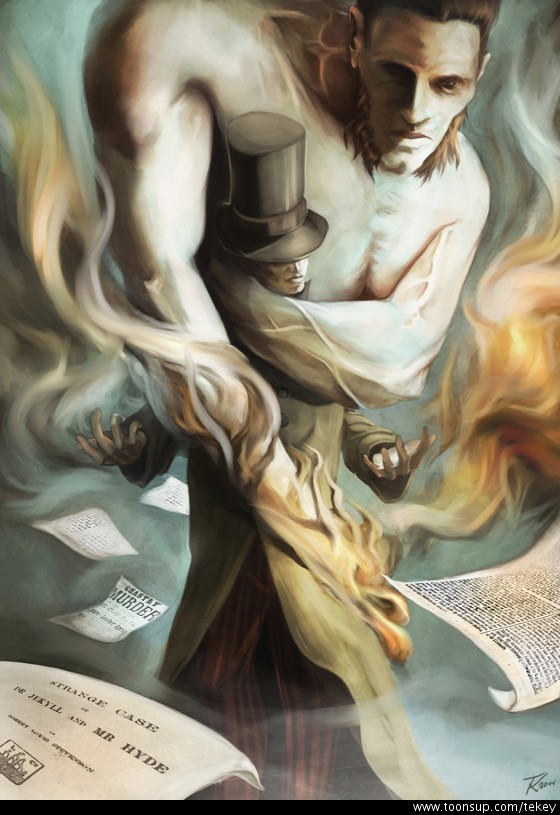
Shadow refers to aspects of our personality relegated to the darkness of the unconscious and which Jung saw as a doorway to the Self. The Shadow contains not only destructive aspects, but also life promoting characteristics and powerful capabilities which can unlock our unique potential. ..

The “Descent of Inanna” is one of the oldest myths of journeying to the underworld where, through death, an initiation takes place and, ultimately a rebirth...

Jung referred to the Dark Night as the ‘night sea journey’ or ‘nekyia’, believing that our sorrow and suffering serve the individuation journey. As an archetypal pattern or process it involves a basic restructuring of the psyche, transforming our individual or collective values and attitudes.

The horrific image of a father cutting off the hands of his daughter belongs only in fairytales, or does it? To be without hands is to be disempowered, helpless and dependent on others...